Last Planner System®
Making on-time delivery the norm through collaborative planning
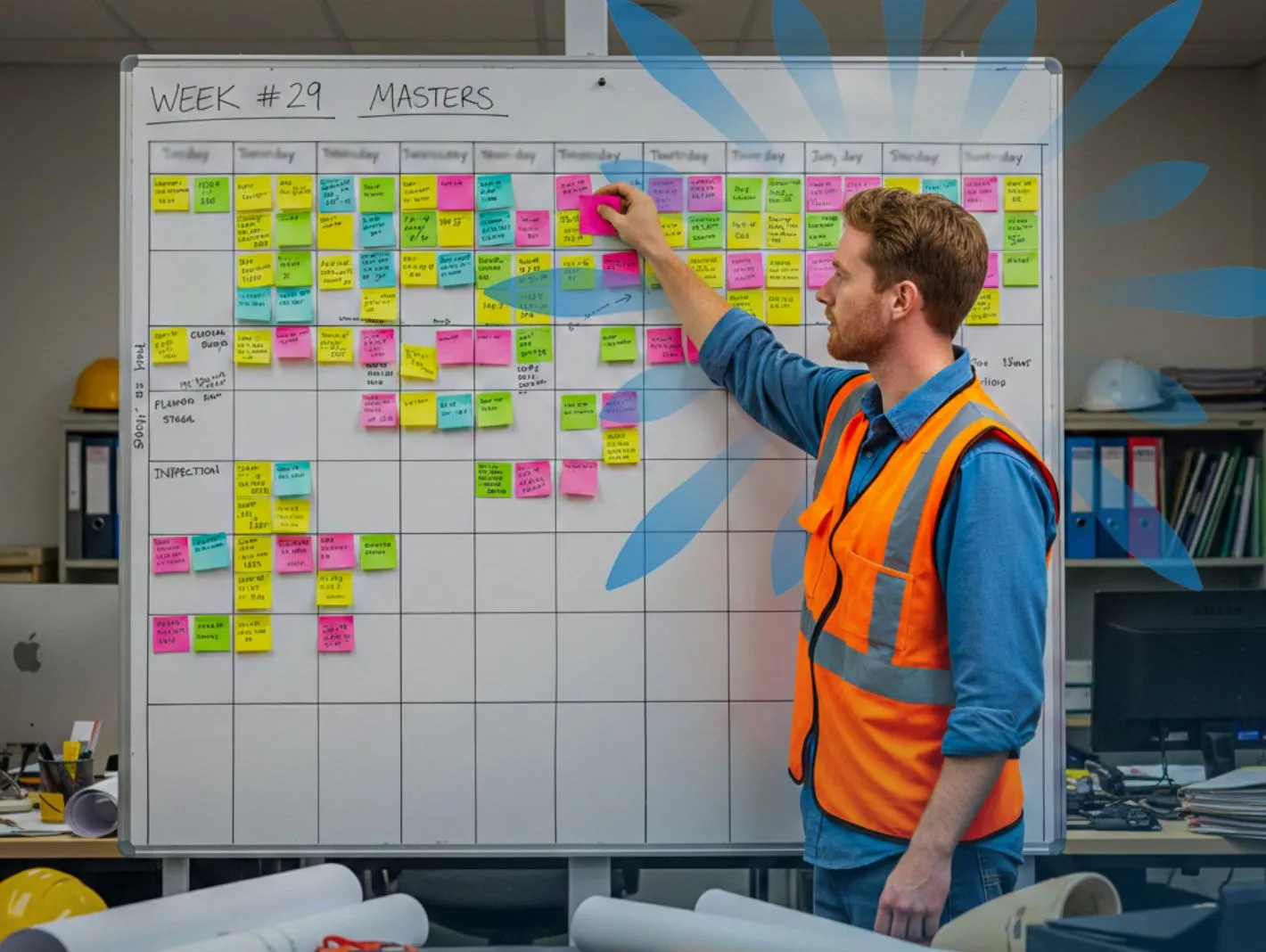

Through the Last Planner System, we align teams, remove constraints early, and focus on work being ready on time. The result: predictable workflow, fewer delays, and certainty in programme delivery.
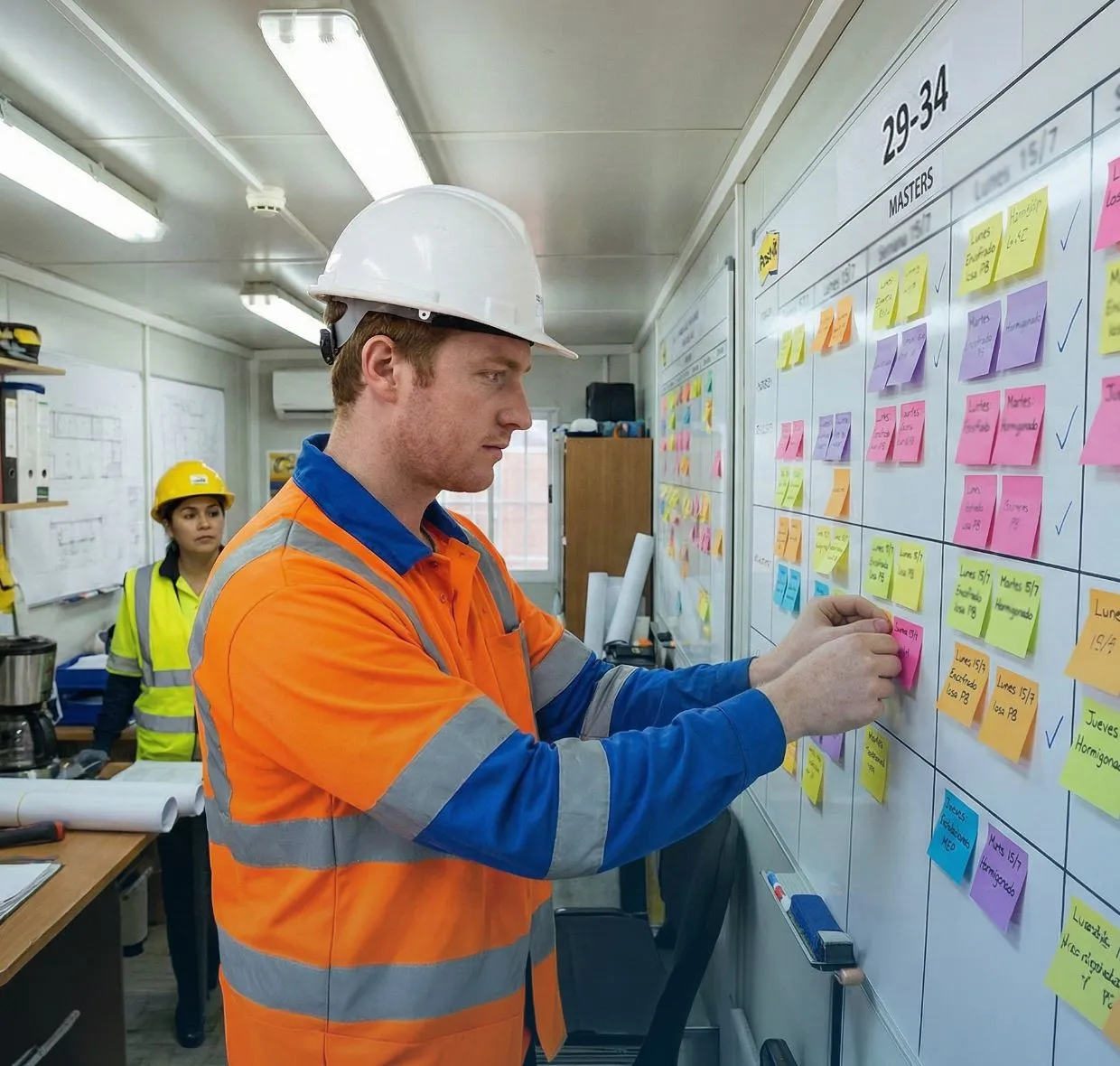
What Is the Last Planner System?
The Last Planner System (LPS) is a practical planning and control system that helps personnel in construction including design teams to deliver work more reliably on site. It is a collaboration between key partners to generate the plan together and there is a high level of trust and teamwork required for the process to be a success.
It is suitable for all partners within the supply chain including:
- Client and Client representatives
- Main Contractor
- Sub-Contractors
- Design Teams
- MMC providers

Programme:
Improved probability of delivering programme on budget on time

Information Flow:
Information is available on time and of the correct quality

Collaboration:
Working collaboratively reduces stress on the job

Prelim’s:
Eliminate prelim costs overruns

Safety:
Improved safety on site with forward planning

Quality:
Reduce snags with forward planning and sequencing of trades
How the LPS Compares to Traditional PM
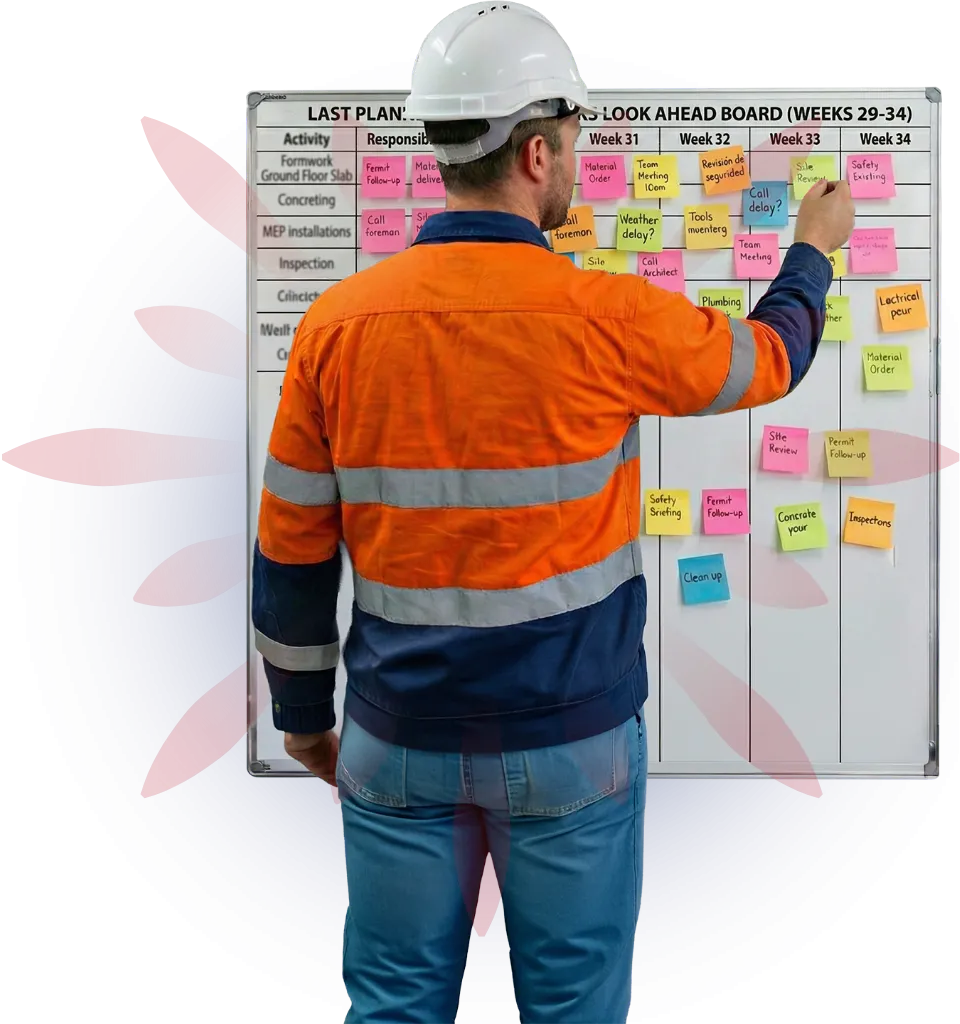
Traditional project management focuses on planning the project. The Last Planner System (LPS) take the programme as a starting point, identifies key milestones and then focuses on making the plan work in practice. They are complementary – but they operate at different levels of control. Below is a summary of the two systems:
Side-by-side Comparison
Traditional Project Management
- Focuses on what should happen
- Programme-driven
- Top-down planning
- Activities are assigned
- Progress is tracked after the fact
- Variance is measured against the plan
- Control through reporting
- Success measured by schedule adherence

Last Planner System
- Focuses on what can and will happen
- Commitment-driven
- Collaborative planning
- Work is committed to by site team
- Readiness is checked in advance
- Variance is analysed to improve the system
- Control through conversations
- Success measured by reliable execution






Other Benefits of the Last Planner System:
Work is only released when it is ready, reducing disruption and reactive decision-making.
When supervisors commit to achievable work, plan reliability increases and productivity stabilises.
Dependencies and interfaces are made visible, reducing delays caused by incomplete or out-of-sequence work.
Constraints such as information gaps, material delays, access to crane, scaffolding sequencing are identified weeks ahead – not on the day.
Design team have real time access to site information and site team. More time to manage site rather than fire fighting.
Supervisors plan the work they commit to, leading to clearer accountability and better engagement.
Take the next step with Last Planner training, hands-on project management support, and Co Plan – our digital tool for smarter project planning.